human design chart reading
How to Read a Human Design Chart, Step by Step
A plain-language walkthrough of reading a Human Design chart: type first, then strategy, authority, profile, and centers — in the order that actually helps.
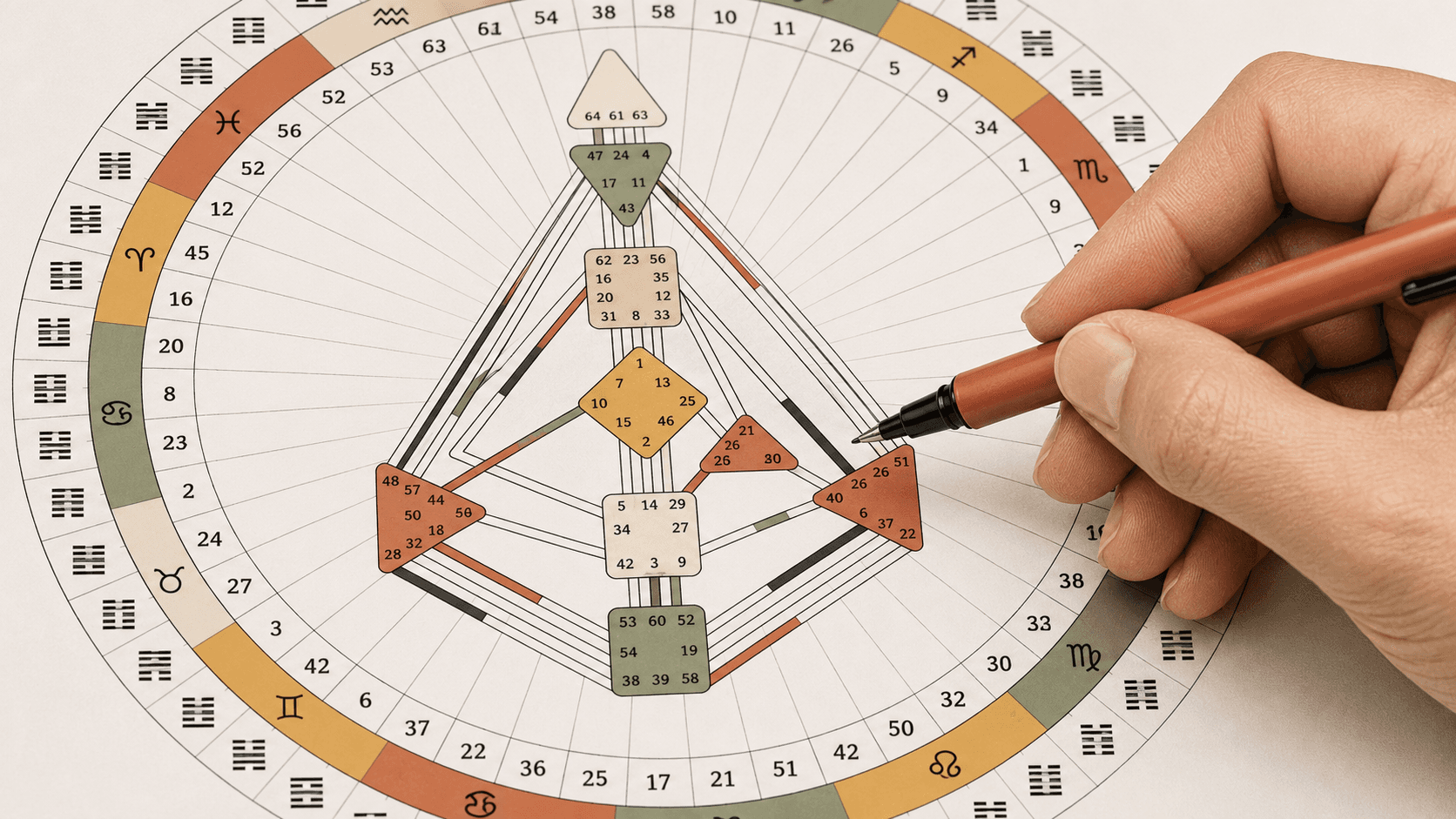
human design chart reading
A plain-language walkthrough of reading a Human Design chart: type first, then strategy, authority, profile, and centers — in the order that actually helps.
A Human Design chart is read in a fixed order: energy type first, then strategy, authority, profile, and finally the defined centers, gates, and channels. Type tells you how your energy engages the world; the rest adds mechanics. This guide walks that order step by step, in plain language.
A Human Design chart — usually called a bodygraph — is a diagram calculated from your birth date, time, and place. It maps planetary positions at two moments onto nine geometric centers connected by channels. Colored-in shapes are called defined; white shapes are called open. The pattern of definition is what the whole reading hangs on.
The system itself blends older symbolic frameworks into one map. It is not science, and it does not need to be for the exercise to be useful: the chart works best as a structured mirror — a fixed set of questions you hold your actual life against.
If you do not have a chart yet, you can compute one for free from your birth details. Everything below assumes you have a bodygraph in front of you.
Start with the single biggest lever: your energy type. Type is derived from which centers are defined and how they connect, and it sorts every chart into one of five broad patterns of how energy engages the world.
Read your type page slowly before touching anything else. Most of the practical value of Human Design — how to work, rest, and commit without grinding yourself down — sits at the type level. Everything after it is refinement.
A useful habit from the first read: hold each sentence against a real week from your life. A chart description earns trust by matching evidence, not by sounding wise.
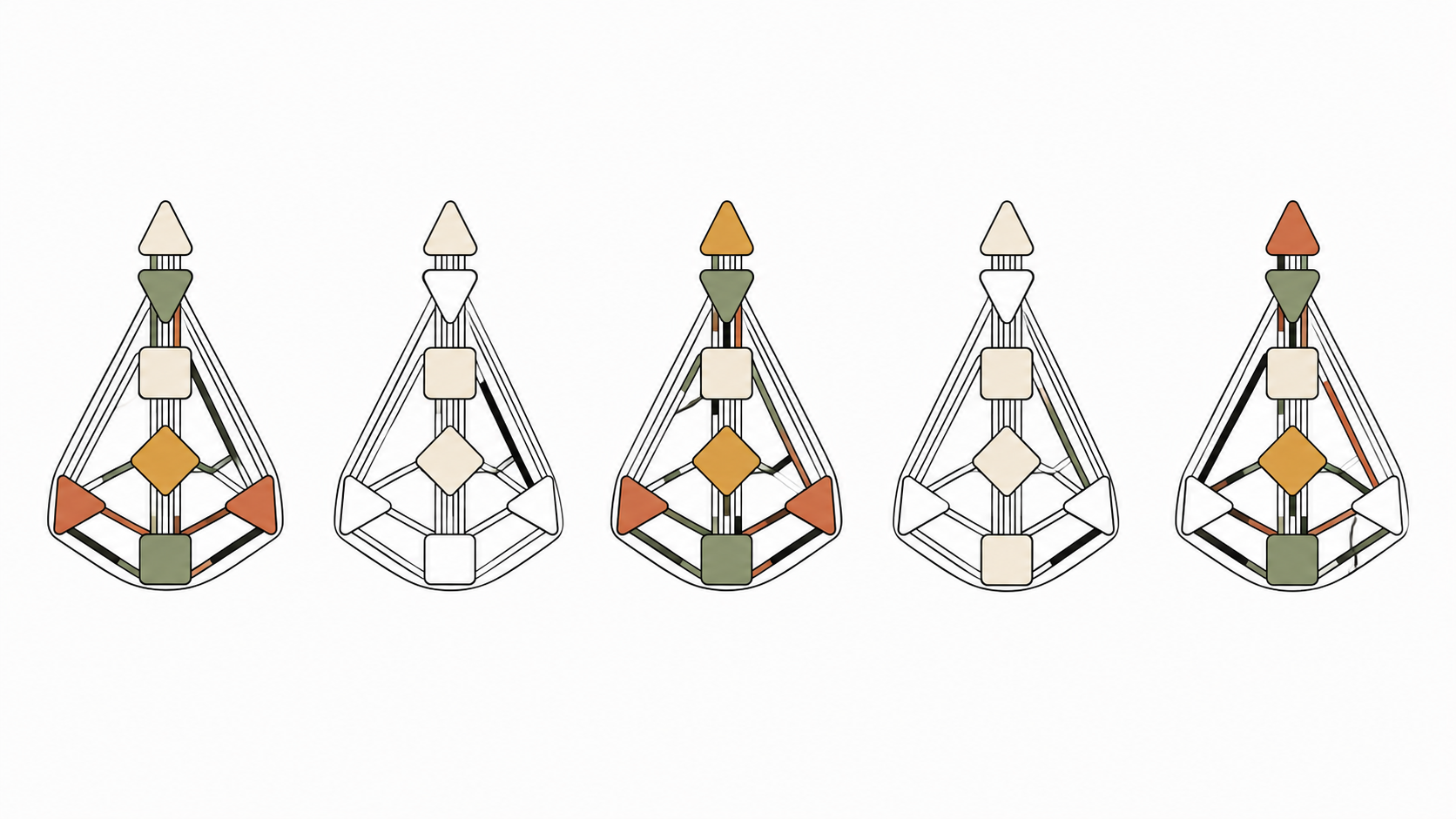
Each type comes with a strategy — the way opportunities are meant to arrive — and a signature feeling when life is working, plus a friction feeling when it is not.
| Type | Share of people | Strategy | Working well feels like |
|---|---|---|---|
| Generator | ~37% | Respond | Satisfaction |
| Manifesting Generator | ~33% | Respond, then inform | Satisfaction |
| Projector | ~20% | Wait for recognition and invitation | Success |
| Manifestor | ~9% | Inform before acting | Peace |
| Reflector | ~1% | Wait a lunar cycle | Surprise and delight |
The percentages are the commonly cited distribution across charts, useful mainly for one thing: noticing that the world is largely built around Generator-style stamina, which is exactly why non-Generator types often feel they are doing life wrong. They are not — they are running a different engine.
Strategy is the doorway; authority is the checkpoint. Strategy describes how new things are meant to enter your life for your type — by responding to what shows up, by informing before you act, by waiting to be recognized and invited. Authority describes how to check one specific decision once it is actually in front of you.
Authorities differ in speed. A sacral response answers in the moment, from the body. An emotional authority needs to ride out a full wave — excitement, doubt, calm — before the real answer surfaces, which makes sleeping on big choices a mechanism rather than a stalling tactic. Other authorities work through instinct, spoken thought, or environment; each has its own page in the reference library.
The practical move is to pair them: let opportunities arrive the way your strategy describes, then run the specific yes-or-no through your authority before committing.
The profile is written as two numbers, like 1/3 or 5/2, derived from where the sun sits in each half of your chart. The first number describes how you build competence on the inside; the second describes how the world tends to meet you on the outside.
Profiles explain a lot of everyday texture that type alone misses: why one person researches for weeks before acting while another learns by breaking things, why some people keep being handed problems to fix, why certain lives run in distinct phases. The twelve combinations each have a reference page worth reading after your type.
If your birth time is uncertain, treat the profile with care — it can flip across a day, which is why honest calculators withhold it rather than guess.
The nine centers are the chart's mechanical layer. A defined center is a consistent energy you can rely on and that others feel from you; an open center is where you take in and amplify other people's energy — often the site of your deepest lessons and your sharpest perception.
Gates and channels are the fine grain: specific themes that color how your centers express themselves. They reward curiosity later, once the big levers are familiar.
A workable pacing rule: spend your first week with type and strategy, your first month with authority and profile, and leave gates and channels for the long tail. Depth added too early just becomes noise.
Ignore anything that talks in absolutes. A chart describes tendencies — where energy tends to flow, where pressure tends to accumulate. It cannot see your history, your constraints, or your relationships, and any reading that claims certainty about your future has left the useful zone.
Also ignore the urge to fix your openness. Open centers are not defects to patch; they are where you sample the room. The goal of a first read is orientation, not renovation.
Test it against evidence. Pick one concrete claim — say, that forcing decisions at the peak of a mood produces regret — and watch a normal week through that lens. A good chart reading generates small, checkable predictions about your energy, and the checking is where the value lives.
Keep what matches repeatedly. Park what is unclear. Discard what contradicts your lived experience, without apology. The chart is the mirror; you remain the authority on your own life.
Questions
Partly. Your energy type and most of the bodygraph are usually stable across a day, so they can be read with a confidence note. Authority and profile genuinely depend on the time of birth, so an honest chart leaves them out rather than guessing.
Strategy describes how opportunities are meant to arrive for your type — responding, initiating and informing, waiting for an invitation. Authority describes how to check a specific decision once one is in front of you, such as a gut response or an emotional wave that needs time.
No. Human Design is a reflective framework, not science, and no chart can know you. Treat every line of a reading as a hypothesis to test against lived experience — keep what fits, drop what does not.
Pattern Atlas is a Human Design–inspired reflective self-discovery product, not a diagnostic tool.
Keep reading

August 17, 2026 · 4 min read
A life audit is a structured check of where your life fits how you're actually wired versus where it's running on autopilot. What it looks like, how often to do one, and a six-area method to run your own.

August 14, 2026 · 4 min read
Which Human Design book to start with, what each one actually covers, and how to read them without treating the system as more certain than it is.

August 10, 2026 · 6 min read
A plain-language guide to Human Design coaches: what a session involves, the 70/30 rule, what to look for, and how to tell whether you need a coach or just your chart.
Curious about your own chart?
Compute your free Human Design chart — your energy type and full bodygraph, in under a minute. No account needed.